

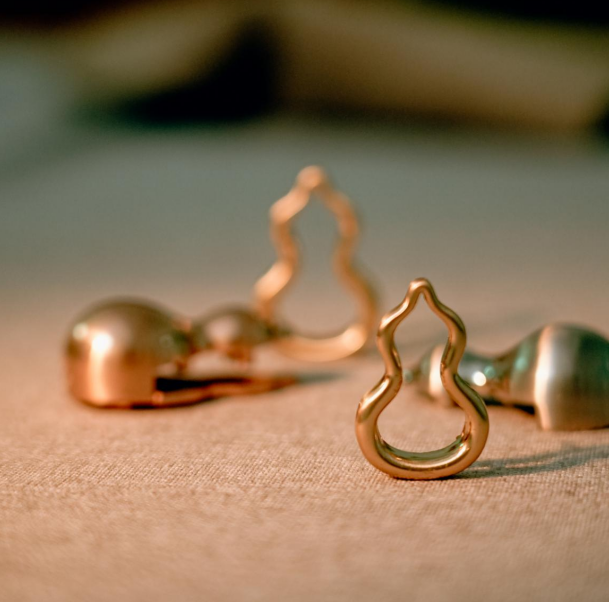
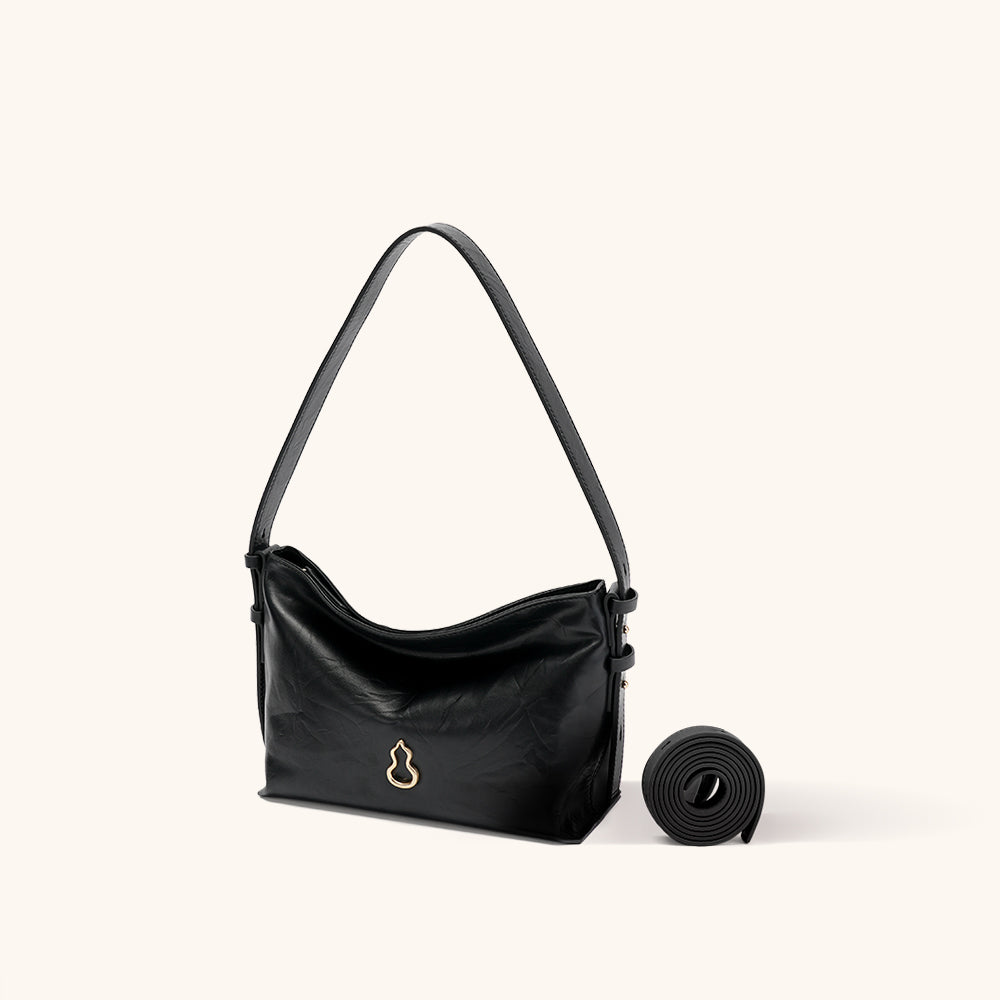
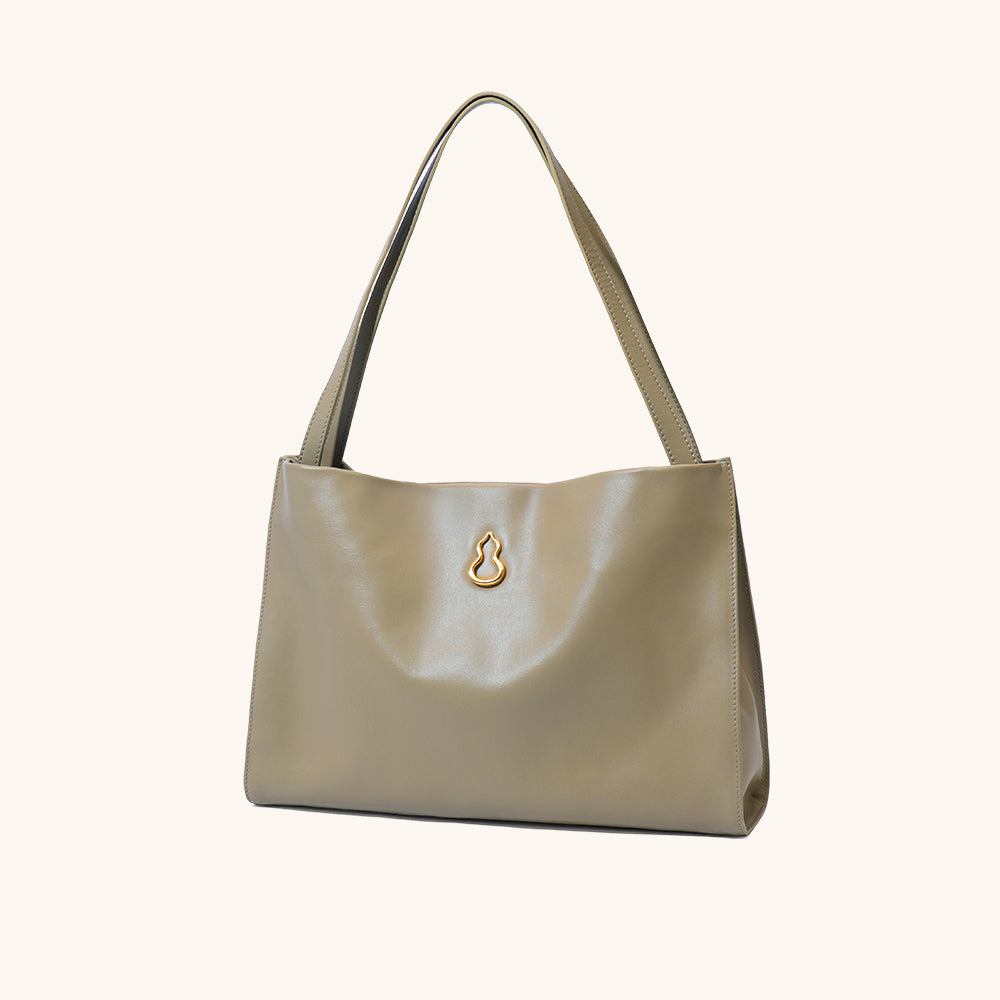
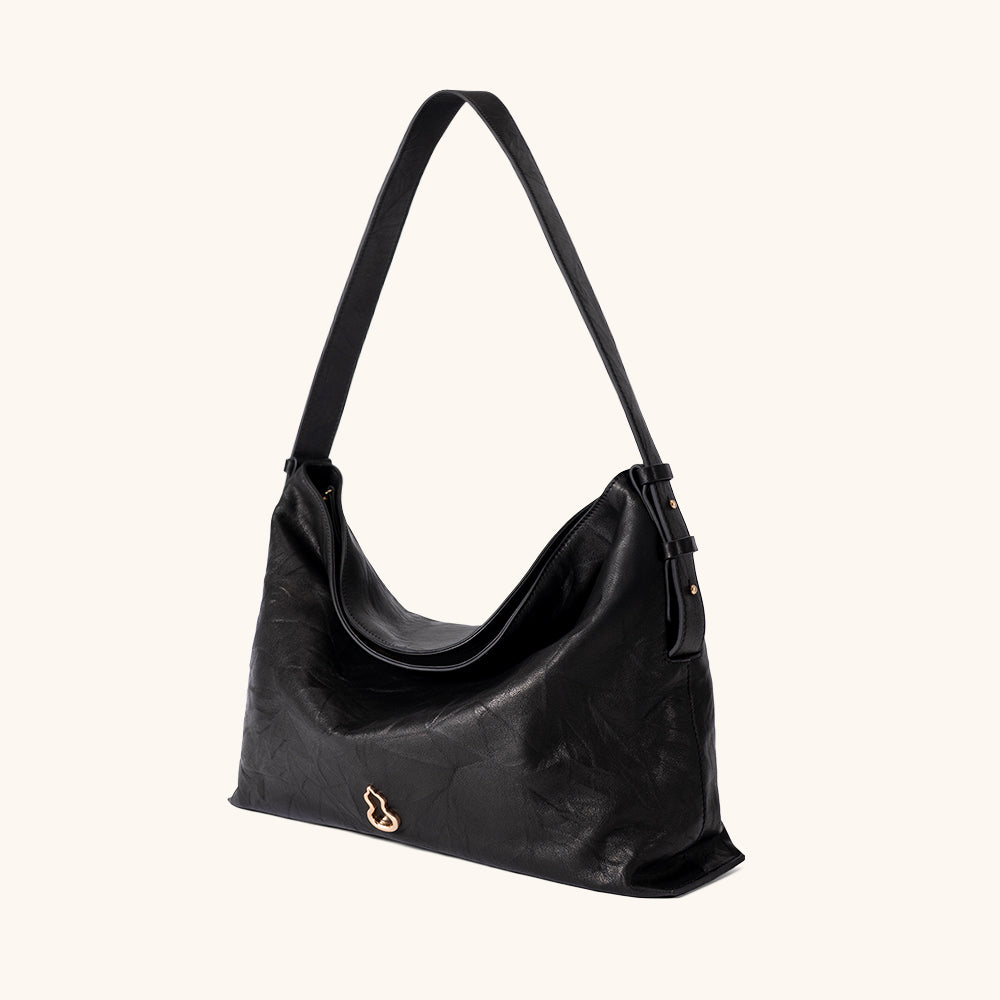
If you own a or saw a Bampo bag, you may have noticed a small gold charm shaped like two circles stacked together. It is easy to admire without thinking much about it. But that shape has a name, a history, and a meaning that goes back more than 6,000 years. It is called the gourd — hulu (葫芦) in Chinese — and it has been a constant presence in human life for more than 6,000 years.

Long before it became an ornament, it was a tool: a vessel carried across dry plains to hold water, hollowed out to store seeds through a long winter, hung above a doorway to keep illness away. Across Chinese history, from Neolithic pottery to Ming dynasty porcelain, the same double-lobed shape appears again and again, generation after generation, dynasty after dynasty. Few symbols in any culture have endured so quietly and so completely.
And yet, most people today walk right past it. The gourd charm on an antique cabinet, the double-lobed pendant in a grandmother’s jewelry box, the small gold ornament on a festival bag — these details barely register. We have grown so accustomed to seeing the shape that we have stopped asking what it means. A symbol that once carried the weight of creation myths, harvest prayers, and protection against evil has quietly faded into decoration.
So what did people actually see in this shape? What gave a simple vegetable the power to stand at the center of creation stories on four different continents — and to travel from ancient China all the way to the handbags we design today? That is the question this story tries to answer.

Hulu: A Symbol of Life and Fertility
The gourd is first of all a plant. It grows quickly and produces many seeds. In early agricultural societies, fertility was a primary concern. More children meant the tribe could survive. More crops meant the community would not starve. The gourd, with its abundant seeds, naturally became a symbol of fertility and abundance.
The gourd also had a practical use. It could be hollowed out and used to store water and food. In a time before metal or plastic containers, the gourd was a life-saving tool. It helped people carry water across long distances. It preserved food for hard times. This practical function gave the gourd a sacred meaning: it was a vessel that sustained life.
This idea appears in Chinese creation myths. The most famous story involves Fuxi and Nüwa, the god and goddess who created humanity. According to legend, a great flood destroyed the world. Only Fuxi and Nüwa survived by hiding inside a giant gourd. The gourd acted like an ark, carrying the last two humans to safety. After the flood, they repopulated the earth. In this story, the gourd is not just a container. It is the womb of humanity.

It means: Heaven, Earth, and Immortality
As Chinese civilization developed, the gourd took on new layers of meaning.
In ancient Chinese philosophy, the two chambers of the double gourd represent heaven and earth. The upper chamber is heaven. The lower chamber is earth. Together, they form a complete universe. Carrying a gourd meant carrying a small world, a symbol of harmony and balance.
Taoist traditions added another dimension. Taoist immortals and hermits were often depicted carrying gourds. What did they keep inside? Pills of immortality. Elixirs that could extend life and ward off evil spirits. The gourd became a symbol of longevity, protection, and magical power. This is why you often see gourd shaped containers in Taoist art and why the gourd is still hung in homes today to keep evil away.
This is also where the English names come from. "Double gourd" describes its two chambered shape. "Bottle gourd" refers to its use as a container.

Sound “lucky” to anther word
In Chinese, the word hulu (葫芦) sounds similar to fulu (福禄). Fu means good fortune and happiness. Lu means wealth and career success. The similarity in sound turned the gourd into a powerful lucky charm.
During Chinese New Year and other traditional festivals, people decorate their homes with gourd symbols. They give gourd shaped gifts to friends and family. They wear gourd pendants and carry gourd charms. All of these express the same wish: may you have good fortune. May you prosper. May your family be blessed.
This tradition is not limited to one region or one ethnic group. Across China, from the Han majority to many minority groups like the Dong people, the gourd is recognized as a positive symbol. It has truly become a shared cultural treasure.

A Symbol That Belongs to the World
The gourd is not only important in China. As Chinese culture spread across Asia, the gourd's meaning traveled with it. But even beyond Chinese influence, many other civilizations independently gave the gourd a special place.
 In ancient Mesoamerica, the Aztec and Maya civilizations used the gourd as a symbol of water, the source of all life. In West Africa and the Caribbean, gourd rattles are essential ritual instruments, used to call spirits and mark sacred moments. In the Philippines, a creation myth tells that the first man and woman emerged from a split gourd.
These different cultures arrived at the same idea on their own. The gourd represents life, protection, and the sacred. This is not just a Chinese symbol. It is a shared human memory.
The Gourd Around Us
 The gourd is everywhere. Its shape is so simple and so basic that it appears repeatedly in nature and in daily life. That is the beauty of it. A truly universal symbol does not need to be complicated.
This is what drew us to the gourd when we started Bampo. Not its grandeur, but its intimacy. It was never a monument. It was always something you held in your hand.
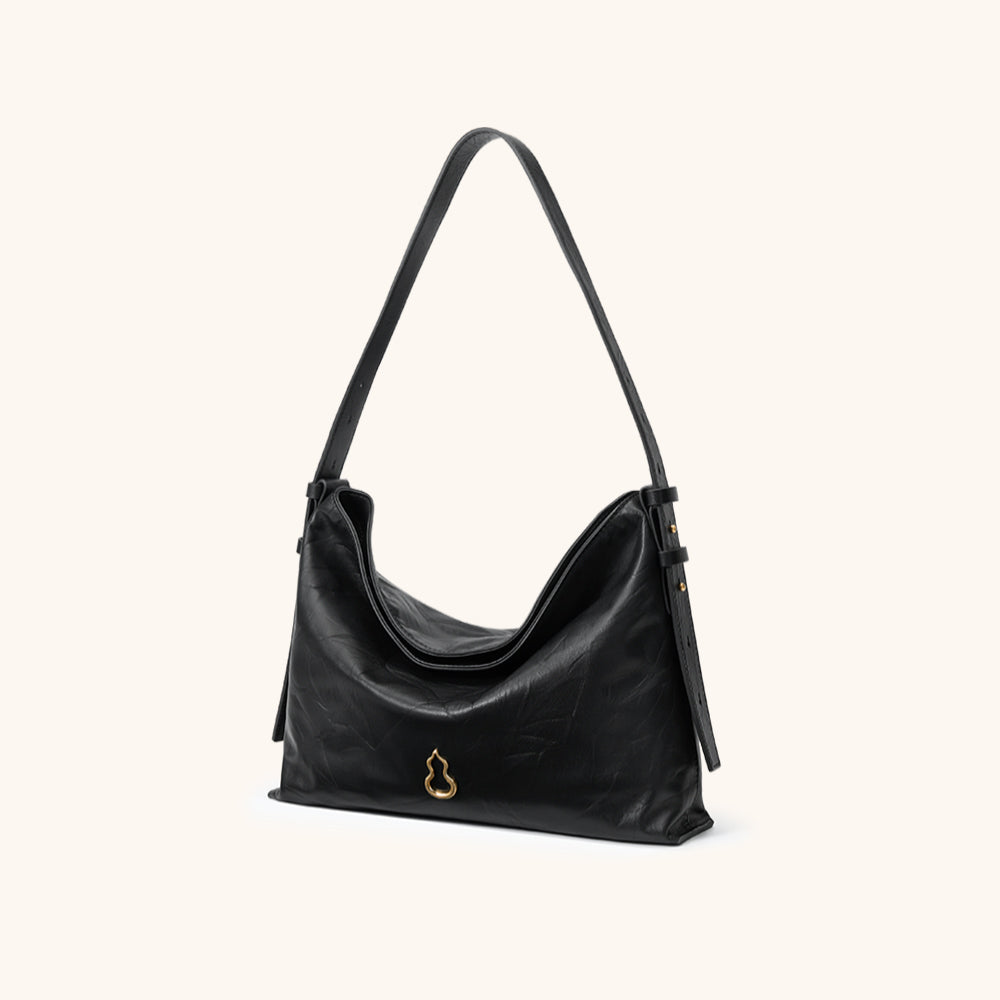
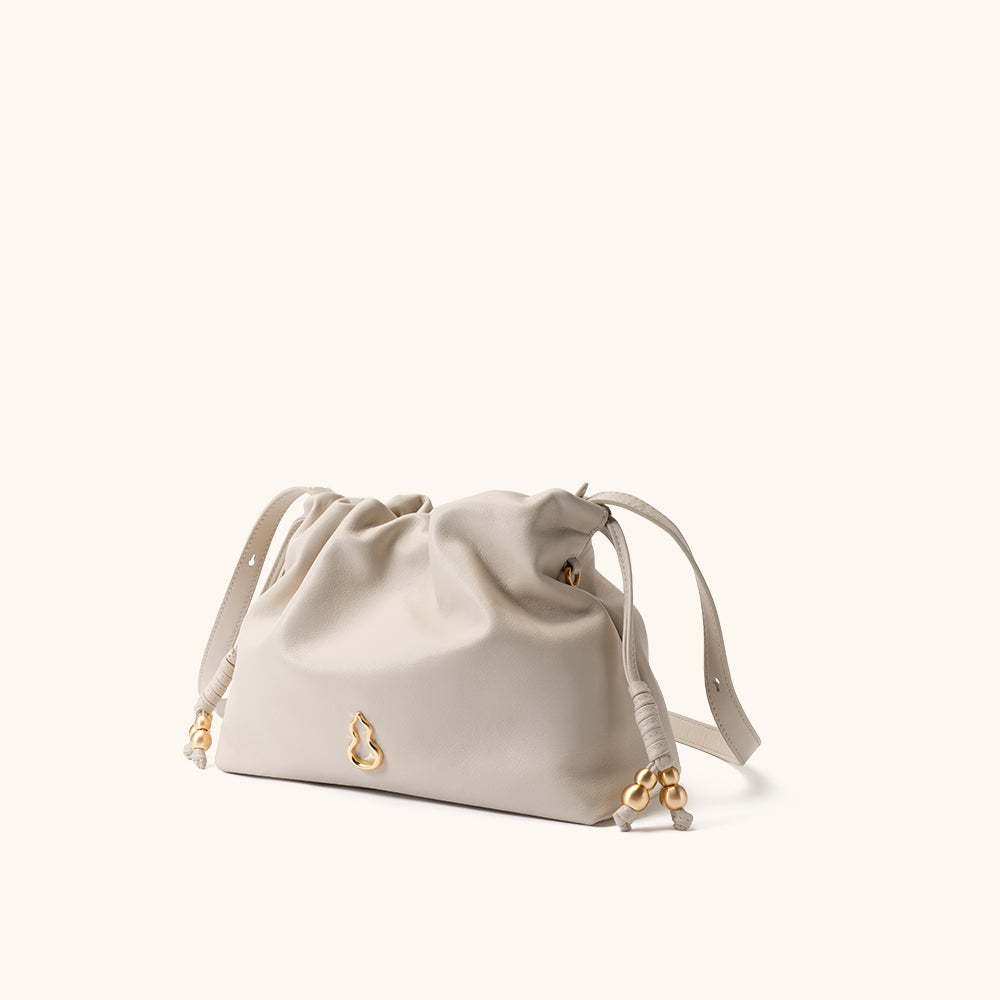
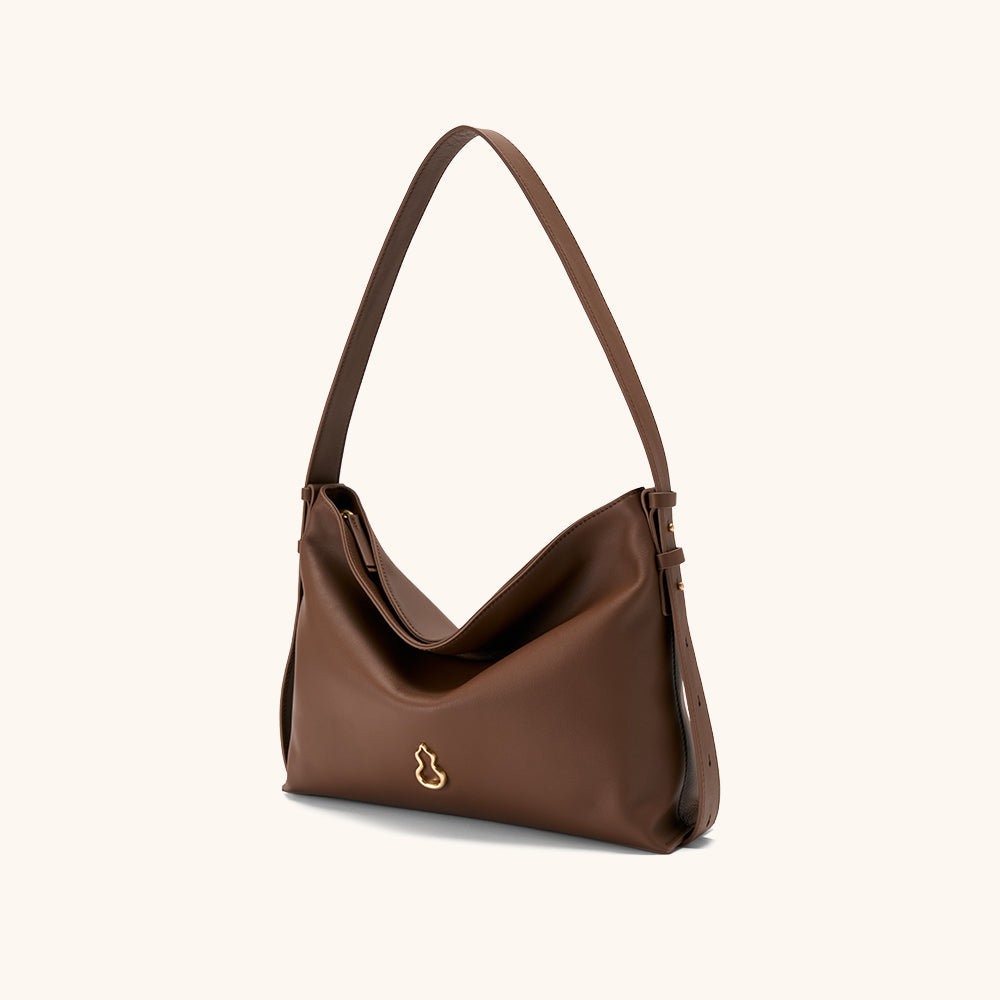
Today, we work the gourd shape into many of our handbag designs — most often as a small gold-plated charm on the surface of the bag. It is a quiet detail. Easy to miss, easy to love once you notice it. And if someone asks what it means, there is a real story to tell: one that starts long before Bampo, and long before any dynasty.






Share:
Aging With You: Relume Collection
Fulfill Flap Tote: The Inspiration Behind the Design